
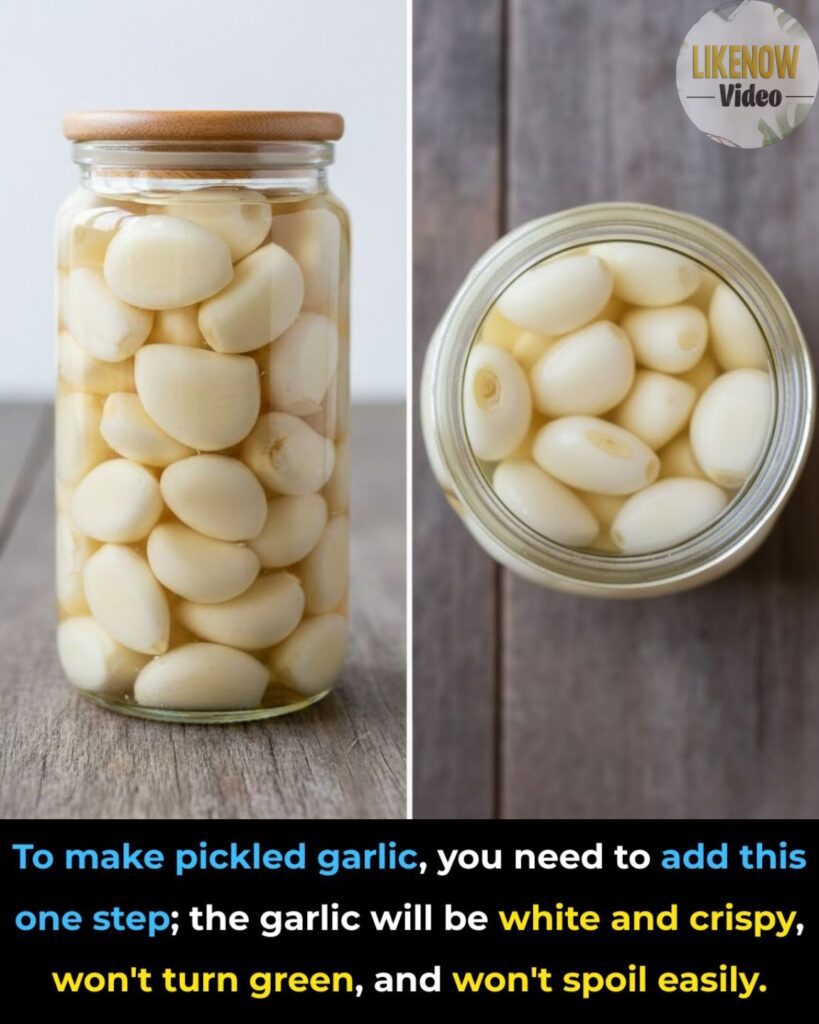
Pickled garlic is a powerful addition to your diet, offering impressive health benefits, including improved immunity, better digestion, and natural detox support. However, many people face a common issue: garlic turning green or losing its crisp texture over time. This usually happens due to improper preparation, incorrect pH balance, or poor storage techniques. Understanding the right method not only preserves the garlic’s natural white color but also ensures long-term food safety, which is essential in today’s health-conscious lifestyle.
The key to perfectly white and crispy pickled garlic lies in controlling acidity and temperature. First, always use fresh, firm garlic cloves and peel them carefully without damaging the surface. Blanching the garlic briefly in hot water (for about 30–60 seconds) helps reduce the enzymes responsible for discoloration. Then, immediately transfer the cloves into ice water to lock in crispness. Prepare a vinegar solution using high-quality white vinegar, salt, and a small amount of sugar—this creates a stable acidic environment, crucial for preventing spoilage and maintaining quality. Using sterilized glass jars is another important step, as it minimizes contamination and ensures longer shelf life.
Storage plays a major role in keeping your pickled garlic fresh and safe. Always seal the jars tightly and store them in a cool, dark place or refrigerate them for best results. Avoid exposure to sunlight or fluctuating temperatures, as this can affect both color and taste. Properly prepared pickled garlic can last for months, making it a cost-effective and healthy addition to your meals. With the rising focus on nutrition, organic food preservation, and sustainable kitchen practices, mastering this simple technique can add both flavor and value to your daily routine.
Disclaimer:
This article is for informational purposes only and does not constitute professional health or food safety advice. Always follow proper hygiene and preservation guidelines, and consult a food safety expert if you are unsure about storage practices.