
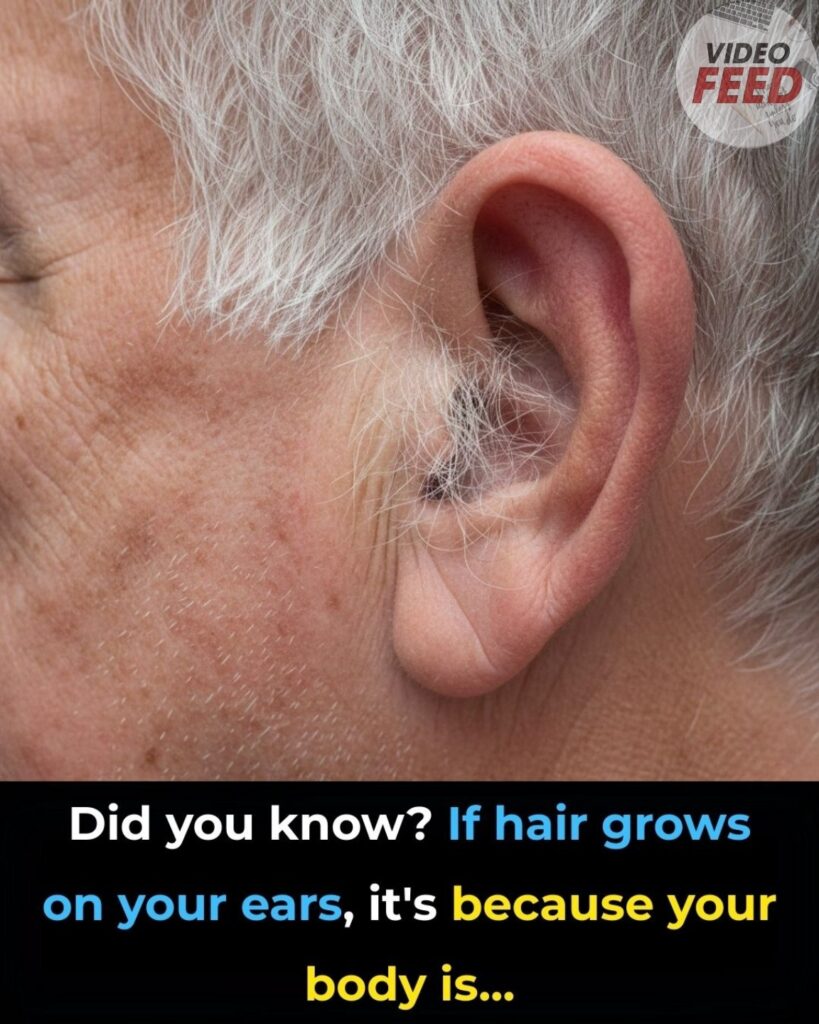
Ear hair is completely natural, especially as men and women age. However, in some cases, noticeable or sudden changes in hair growth patterns can reflect underlying hormonal and metabolic shifts in the body. While it is often just a normal part of aging, some studies suggest that increased body hair in unusual areas may sometimes be linked with changes in overall health balance and endocrine function.
One key factor behind excessive ear hair growth is hormonal activity, particularly involving testosterone. As levels fluctuate with age, hair follicles in certain areas may become more active. In rare cases, excessive hair growth patterns can be associated with metabolic conditions such as Polycystic Ovary Syndrome in females, or general endocrine imbalance in males. However, in most situations, ear hair alone is not a sign of disease but rather a normal biological variation influenced by genetics and aging.
Doctors emphasize that ear hair should be viewed as part of personal grooming and hygiene rather than a direct medical warning sign. That said, sudden changes in hair growth combined with other symptoms like fatigue, weight changes, or skin issues may require a medical checkup. Maintaining a balanced diet, regular exercise, and proper preventive healthcare screening helps support overall hormonal stability and long-term well-being. Cosmetic trimming is generally safe if it becomes excessive, but medical attention is only needed when other symptoms are present.
Disclaimer:
This article is for informational purposes only and does not replace professional medical advice, diagnosis, or treatment. If you notice unusual or sudden changes in your body, consult a qualified healthcare provider for proper evaluation