
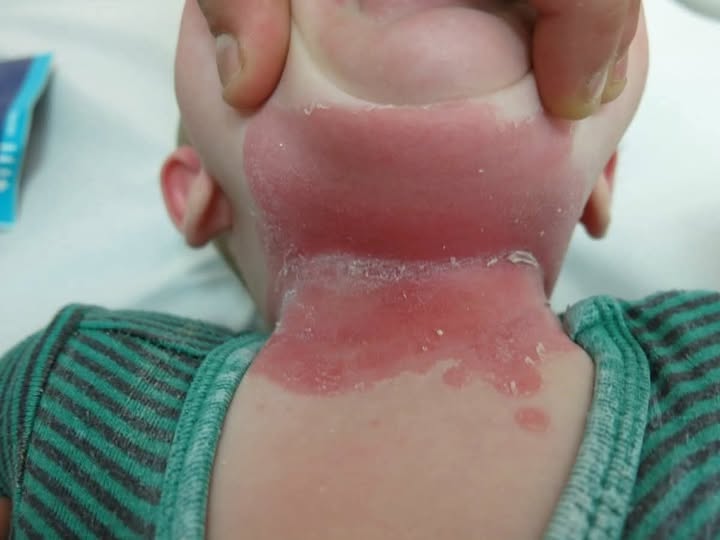
Many parents are unaware that certain sleeping conditions can cause serious skin irritation in babies and young children. A child’s skin is extremely sensitive, and prolonged exposure to heat, sweat, friction, or direct sunlight can quickly lead to painful skin reactions. Pediatric health specialists often warn that leaving a baby sleeping in hot environments, tight clothing, or areas where moisture builds up can trigger severe skin inflammation. When delicate skin stays damp or overheated for long periods, it can lead to redness, peeling, and irritation that may resemble burns. Preventive healthcare practices such as proper ventilation, comfortable clothing, and regular skin checks are essential for protecting infants from avoidable skin problems.
One of the most common issues in babies is severe skin irritation caused by trapped moisture, sweat, or heat while sleeping. In warm environments, sweat can accumulate around the neck folds and under the chin, which may lead to conditions like Heat Rash or Contact Dermatitis. These conditions occur when sweat glands become blocked or when the skin reacts to prolonged contact with irritants such as saliva, fabric materials, or detergents. Pediatric dermatology experts emphasize that infants are more vulnerable because their skin barrier is still developing. If irritation continues without proper care, the skin may become red, swollen, and begin peeling, which increases the risk of infection and discomfort for the child.
Parents and caregivers can reduce these risks by creating a safe and comfortable sleep environment for babies. Keeping the room at a moderate temperature, dressing infants in breathable clothing, and ensuring the neck and skin folds stay dry can help prevent irritation. Regular pediatric checkups and early treatment of any skin redness are also important parts of preventive child healthcare. If severe redness, peeling, or swelling appears on a baby’s skin, consulting a healthcare professional immediately is the safest step. Early medical care can prevent complications and help restore healthy skin quickly.
Disclaimer:
This article is for informational and educational purposes only and should not be considered professional medical advice. Always consult a qualified healthcare provider or pediatric specialist if a child shows signs of severe skin irritation or unusual symptoms.