
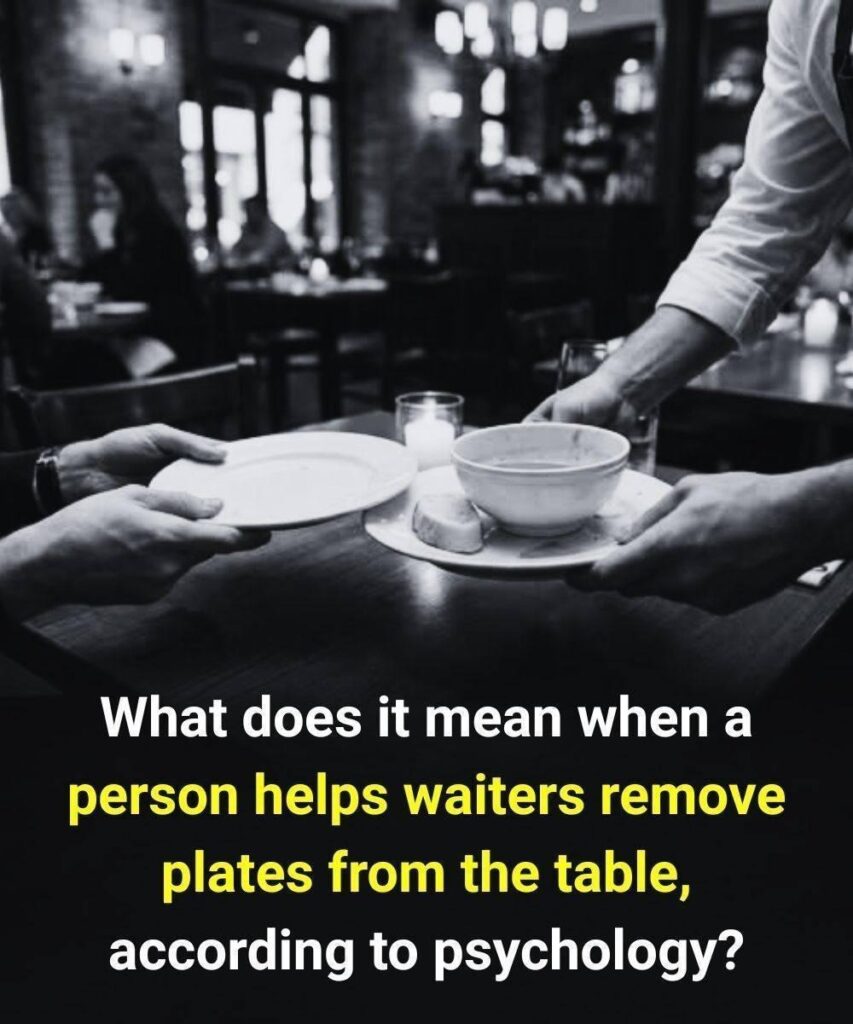
Small, seemingly insignificant actions often reveal deeper layers of human behavior, and one such gesture is when someone helps a waiter clear the table or remove plates. From a psychological perspective, this behavior is strongly linked to empathy and prosocial tendencies. Individuals who engage in this act are often more attuned to the needs of others and display higher emotional intelligence. They recognize the workload of service staff and instinctively step in to reduce the burden, even when it’s not expected. This type of behavior can signal a cooperative mindset, where the person values mutual respect and shared responsibility over rigid social roles.
Beyond empathy, this action is also associated with personality traits such as conscientiousness and humility. People who help clear the table are less likely to feel entitled and more likely to view service workers as equals rather than subordinates. In behavioral psychology, this reflects a lower sense of social dominance and a higher inclination toward fairness and respect. Interestingly, studies in social dynamics suggest that such individuals often exhibit stronger relationship-building skills and are perceived as more trustworthy. Their willingness to engage in small acts of kindness can create positive impressions, making them more likable in both personal and professional environments. In high-trust settings, these subtle behaviors can even influence long-term social and business outcomes.
Additionally, helping a waiter can indicate situational awareness and a proactive attitude—qualities highly valued in leadership and professional success. It shows that a person is not solely focused on their own experience but is aware of the broader environment and the people within it. This aligns with modern concepts of emotional intelligence and social awareness, which are critical in leadership, networking, and interpersonal communication. While the act itself may seem minor, it often reflects a mindset rooted in respect, cooperation, and awareness. In a world increasingly driven by individualism, such gestures stand out as indicators of strong character and social intelligence, offering insight into how a person may behave in more significant situations.
Disclaimer: This article is for informational and educational purposes only and is based on general psychological principles. Individual behavior can vary widely, and no single action should be used to definitively judge a person’s character or personality.