
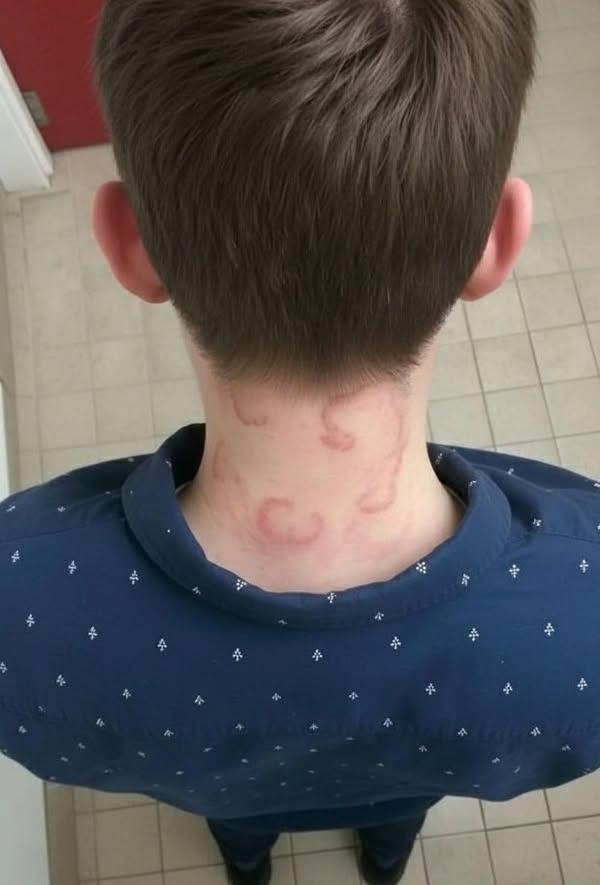
Seeing persistent red, ring-shaped marks on your child’s skin for over two months can be alarming and confusing for any parent. These circular, scaly patches on your son’s neck, worsening over time, are often signs of a common fungal infection called Tinea corporis. This superficial fungal infection affects the skin and is especially common in children due to their close contact with others and shared environments like schools or sports facilities. Early recognition and treatment are crucial to prevent the infection from spreading and worsening, both in appearance and discomfort.
From a medical and treatment standpoint, Tinea corporis typically causes itchy, red, and circular lesions with raised edges that can expand if left untreated. Diagnosis usually involves a physical exam, sometimes supplemented by a skin scraping test to identify the fungus. Treatment consists of topical antifungal creams or, in more severe cases, oral antifungal medications prescribed by a healthcare provider. Maintaining good hygiene, avoiding shared personal items, and keeping the affected area clean and dry are essential to aid recovery and prevent reinfection. Prompt medical evaluation ensures proper diagnosis and tailored treatment to minimize complications.
In conclusion, the persistent skin condition on your son’s neck is likely a fungal infection such as ringworm, which is common but easily treatable with appropriate medical care. Early intervention and adherence to treatment plans can resolve the infection and prevent further spread. It is advisable to consult a pediatrician or dermatologist promptly for accurate diagnosis and effective management, ensuring your child’s comfort and health.
Disclaimer: This article is for informational purposes only and does not substitute professional medical advice. Please consult a licensed healthcare professional for an accurate diagnosis and personalized treatment.