
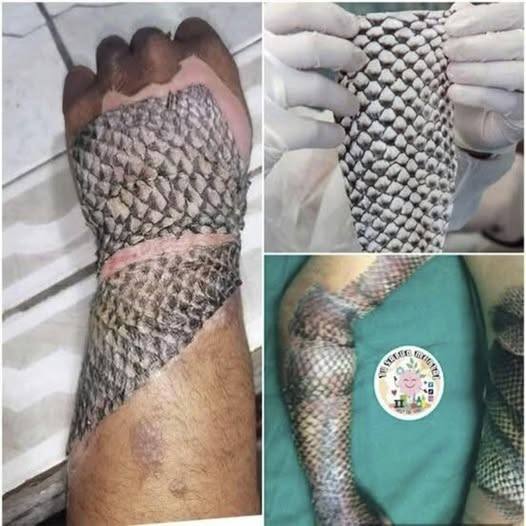
In recent years, an unexpected medical innovation has transformed the way doctors treat severe burns: the use of tilapia fish skin as a biological bandage. What once seemed unusual has now become a groundbreaking advancement in modern wound care and regenerative medicine. Tilapia skin, commonly discarded during fish processing, has proven to be rich in collagen and moisture-retaining properties, making it highly effective for treating burn injuries. Medical researchers discovered that the structure of tilapia skin closely resembles human skin, allowing it to protect wounds, reduce pain, and support the body’s natural healing process. This innovative treatment has already helped thousands of burn patients, especially in regions where traditional skin grafts are expensive or difficult to obtain.
The process begins by carefully sterilizing and preparing the tilapia skin so it is safe for medical use. Once applied to a burn wound, the skin acts as a natural protective barrier that prevents infection while keeping the injured area hydrated. Unlike many traditional bandages that must be replaced frequently, tilapia skin can stay in place for longer periods, reducing the need for painful dressing changes. This not only improves comfort for patients but also lowers the risk of complications during recovery. Doctors have reported that patients treated with tilapia skin often experience faster healing times and less discomfort compared to some conventional treatments. In addition, the natural collagen found in the fish skin supports tissue regeneration, which is crucial for people recovering from second- and third-degree burns.
This innovative medical technique has been especially impactful in developing healthcare systems, where access to advanced burn treatments can be limited. By turning a commonly available resource into a life-changing medical material, doctors and researchers have opened new possibilities for affordable burn care. Hospitals using tilapia skin have reported significant improvements in patient recovery and treatment costs. As research continues, scientists are exploring how this method could be expanded for other types of wounds and surgical recovery. What was once considered waste from the fishing industry is now saving lives and restoring hope for people facing one of the most painful medical conditions.
Disclaimer:
This article is for informational and educational purposes only. Medical treatments, including the use of tilapia skin for burn care, should only be administered by qualified healthcare professionals in appropriate clinical settings. Individuals should always consult licensed medical providers for diagnosis and treatment options.