
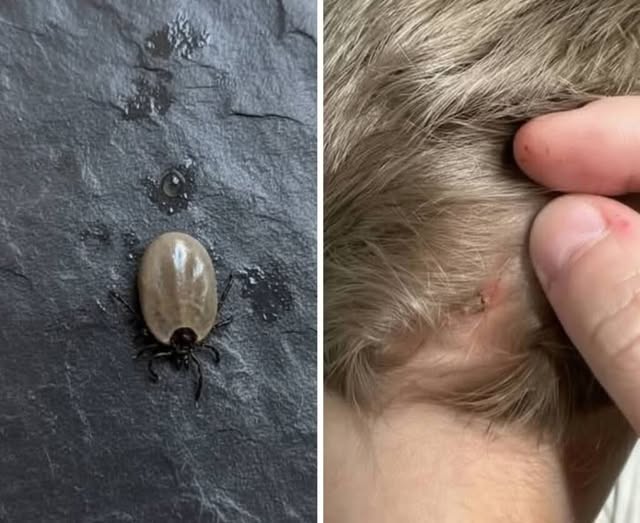
The insect shown in the image appears to be a Tick, a small parasitic arachnid that attaches itself to the skin of humans and animals to feed on blood. Ticks are commonly found in grassy areas, forests, and places where pets or wildlife are present. When they attach to the scalp or skin, they can remain there for hours or even days while feeding. Because ticks often hide in warm areas like the scalp, behind the ears, or under the arms, they can sometimes go unnoticed until someone spots the swollen body attached to the skin.
Ticks are important to remove carefully because they can sometimes carry diseases, including Lyme Disease and Rocky Mountain Spotted Fever. Health professionals recommend removing a tick with clean tweezers by gripping it close to the skin and pulling it straight out slowly without twisting. After removal, the area should be cleaned with soap and water or antiseptic. Parents should monitor the child for symptoms such as fever, rash, fatigue, or unusual redness around the bite area during the following days.
Preventing tick bites is also important, especially for children who play outdoors. Wearing long sleeves, checking the scalp and body after outdoor activities, and using safe insect repellents can reduce the risk of tick attachment. If a tick bite leads to symptoms or if there is uncertainty about proper removal, it is always best to consult a healthcare professional for guidance and possible testing.
Disclaimer:
This article is for informational purposes only and should not replace professional medical advice. If a tick bite causes symptoms or concerns, seek guidance from a qualified healthcare provider.