
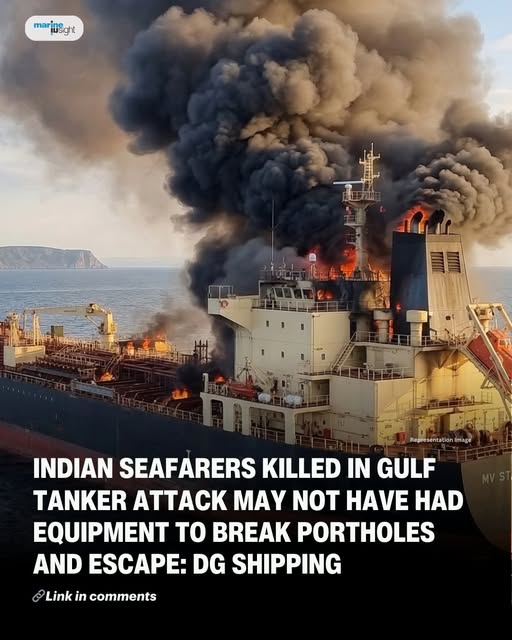
Authorities in India are investigating a tragic maritime incident in the Persian Gulf after several Indian seafarers lost their lives during a tanker attack. According to Directorate General of Shipping, early findings suggest the crew members may not have had access to specialized emergency equipment needed to break portholes and escape during the crisis. Maritime safety experts note that modern tanker vessels operate under strict international shipping regulations, but emergencies such as fires, explosions, or attacks can quickly turn fatal if crews lack proper evacuation tools or training. The tragedy has once again raised global concerns about maritime safety compliance, shipboard emergency preparedness, and the insurance risk factors associated with high-value energy transportation across sensitive global shipping corridors.
The tanker incident highlights broader challenges faced by the global shipping industry, particularly in high-risk maritime zones like the Middle East energy corridor. Oil tankers and cargo vessels moving through the region often carry cargo worth millions of dollars, making maritime security, vessel insurance, and crew safety critical priorities for shipping companies and international regulators. Experts say proper emergency equipment—including escape hammers, fire-resistant suits, life-saving appliances, and emergency communication systems—can significantly improve survival chances during onboard emergencies. Global maritime organizations also emphasize compliance with international safety frameworks such as those overseen by the International Maritime Organization, which sets standards for ship construction, crew training, and maritime risk management. Failure to meet these standards can expose shipping companies to legal liabilities, insurance claims, and costly operational disruptions.
Industry analysts believe the incident could trigger renewed scrutiny of tanker safety protocols, crew training programs, and maritime compliance audits. Shipping companies operating in high-risk regions are increasingly investing in advanced safety technology, cybersecurity systems for vessels, and enhanced risk assessment strategies to protect both crew and cargo. The tragedy has also drawn attention from maritime insurers, legal experts, and global shipping regulators who monitor safety standards across international fleets. As investigations continue, policymakers and maritime safety authorities are expected to evaluate whether stricter compliance requirements, improved onboard emergency equipment, and stronger regulatory oversight are needed to prevent similar incidents in the future. ⚓🌍
Disclaimer:
This article is for informational purposes only and is based on publicly available reports. It does not constitute legal advice, maritime safety certification, or official investigation findings. Details may change as authorities continue their inquiries. Readers should consult verified news sources and official government statements for confirmed updates.